CV builder
A CV builder for A4, with or without a photo
If you are applying in the UK, Ireland, continental Europe, the Middle East, Africa, Asia or Australia, the document employers ask for is usually called a CV, it is printed on A4, and the conventions around photos and personal details vary from country to country. Weydr builds CVs to those expectations and tailors each one to the job you are applying for.
Every CV exports on A4 paper as PDF and Markdown (.md), with a choice of 15 templates, including photo layouts for the markets where a headshot is common.
Updated 26 November 2026
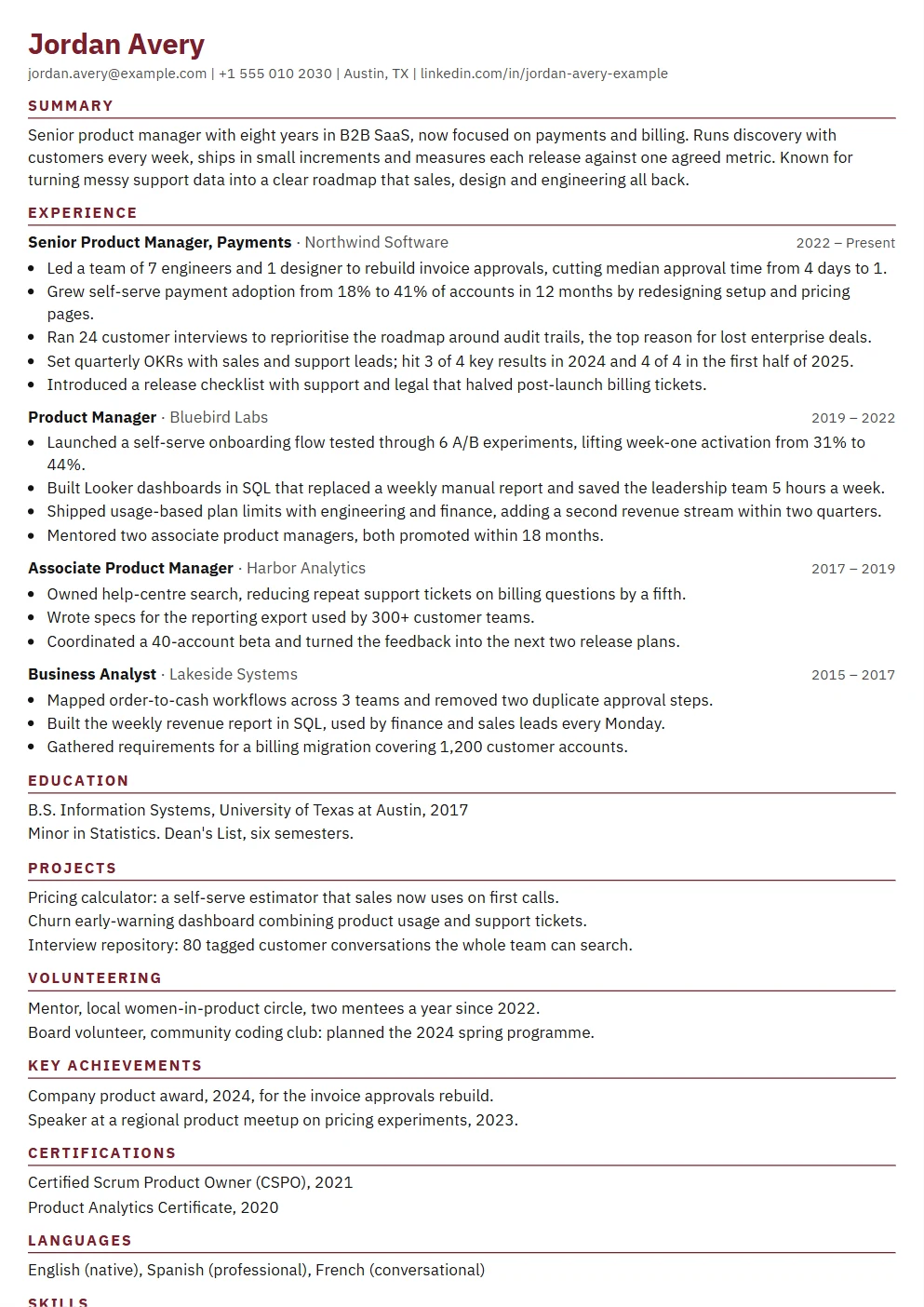
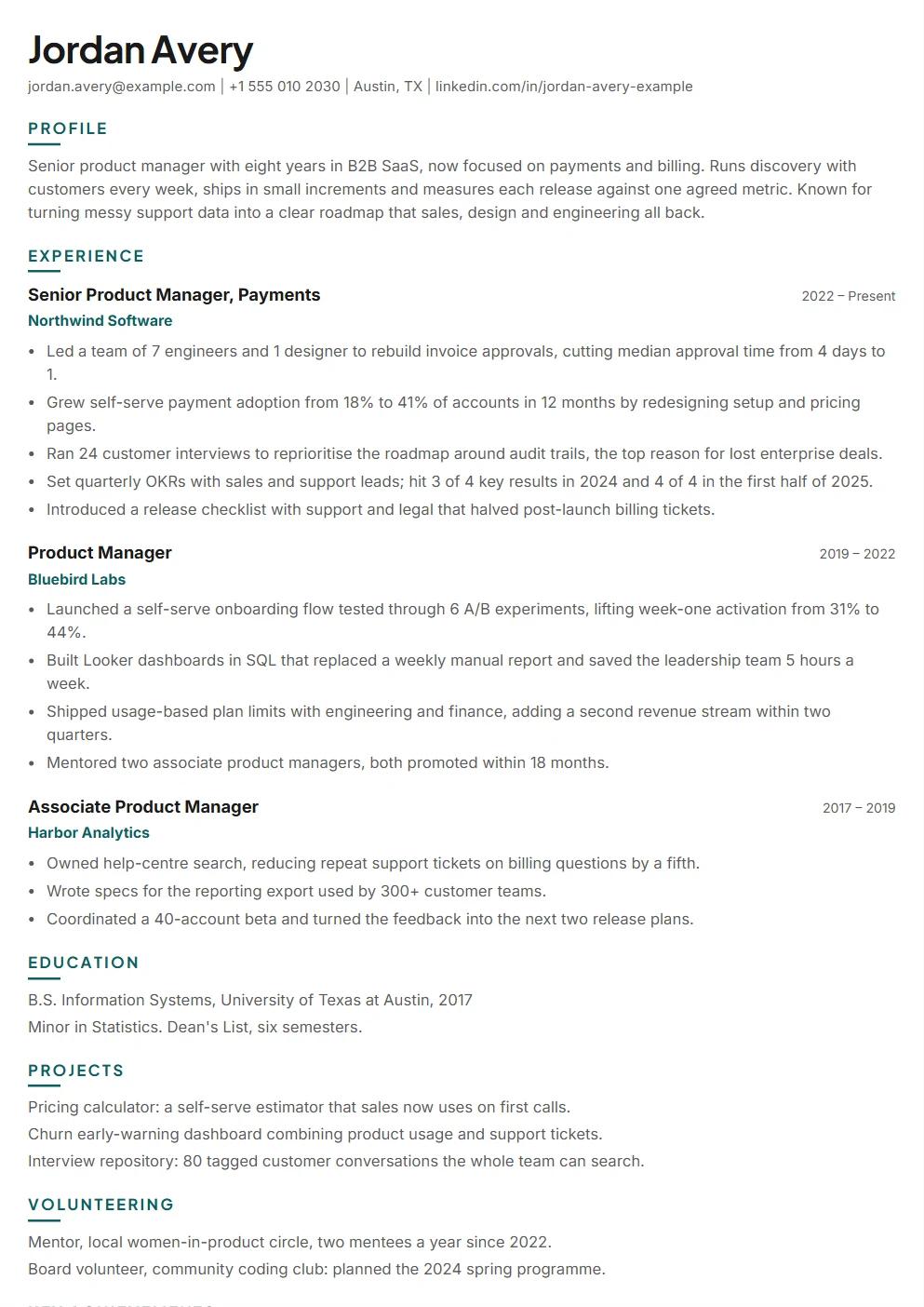
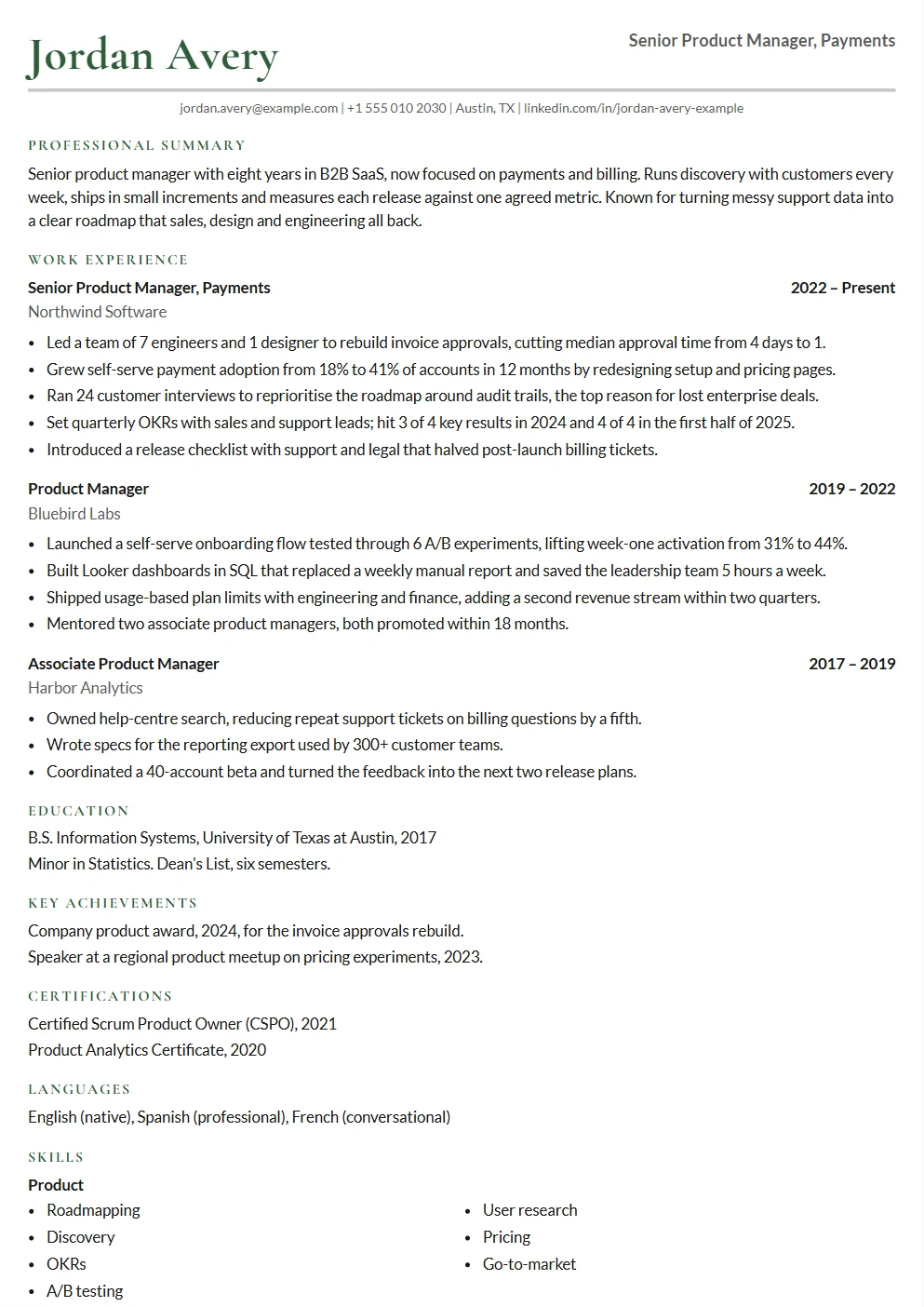
CV or résumé: what the words mean
In the United States and Canada, a résumé is the short document you send for most jobs, and a CV (curriculum vitae) is a longer academic record used for research, teaching and medical posts. In the UK, Ireland, most of Europe, India, South Africa, Australia and New Zealand, CV is simply the everyday word for the job application document, and it plays the same role as an American résumé.
So when a UK employer asks for a CV, they mean a document of about two pages that summarises your experience, skills and education, not a full academic record. Weydr treats the two words as the same document. The editor, templates and tailoring work the same way whichever you call it.
A4, not US Letter
A4 (210 by 297 millimetres) is the standard paper size almost everywhere outside the United States, Canada and parts of Latin America, which use US Letter. The difference is small but visible: a CV laid out for Letter and printed on A4 can end up with cramped margins at the bottom or an awkward page break, and the reverse happens too.
Weydr lays out and exports CVs on A4. The live preview in the editor shows real A4 pages, so the page breaks you see while editing are where they fall in the exported PDF. Margins have two presets, so you can trade a little white space for an extra line or two when a CV runs slightly over.
Photo or no photo: common practice by country
Whether to put a photo on your CV is one of the most common questions from people applying across borders. There is no single rule, and expectations shift by employer and industry, but these are the widely documented norms:
- United States, United Kingdom, Canada, Ireland and Australia: CVs commonly leave the photo off. Employers in these countries generally prefer not to receive one, partly because of anti-discrimination practice, and many recruiters advise against it.
- Germany, Austria and Switzerland: a professional photo has traditionally been common on a CV (the Lebenslauf), although it is no longer expected by every employer.
- Much of continental Europe, including France, Belgium, Spain, Italy and parts of Eastern Europe: photos are commonly included, with practice varying by sector and company.
- The Middle East, including the Gulf states: CVs commonly include a photo, along with personal details such as nationality.
- Parts of Asia, including China, Japan, South Korea and several Southeast Asian countries: a photo is commonly expected, and some markets use set formats.
When in doubt, follow the posting. If the job ad or the employer's careers page says not to include a photo, leave it off. If you are applying to an international company through an online portal, a photo-free CV is the safer default, because single-column, photo-free layouts are the ones applicant tracking systems read most reliably.
If you do include a photo, use a recent, well-lit head-and-shoulders picture with a plain background and the kind of clothes you would wear to the interview. It is a professional document, not a social profile.
Photo templates
These templates have a photo slot. The photo upload field only appears in the editor when the template you have picked can show it, and you can switch the same CV to a photo-free layout at any time without retyping anything.
- Headshot templateSquare photo beside your name, a full-width contact row, plain black rules.
- Profile Photo templateFull-height sage-green photo column, serif name. A confident editorial look.
- Portrait templateRoyal-blue photo sidebar with a timeline-dot experience list. For roles where a headshot is expected.
- Divider templateSlate-blue top banner, circular photo, two-column split by a single vertical rule.
- Banner templateNavy photo banner across the top, cream two-column body beneath.
For portals and for the UK, Ireland and North America, use one of the 7 single-column, photo-free templates tagged ATS-safe. Browse all of them on the templates page.
What to put on a CV outside the US
- Length: two pages is the usual length for an experienced candidate in the UK and much of Europe. One page is fine for graduates and early-career applicants.
- Personal details: in the UK and Ireland, a name, phone number, email address, town or city and a LinkedIn URL are enough. Date of birth, marital status and nationality are commonly left off. In some other markets they are still customary, so check local practice.
- Personal statement: UK CVs often open with a short profile of three or four lines. Tailor it to the job rather than reusing one generic paragraph.
- Spelling: match the employer's variety of English. A UK or Irish employer will expect British spelling, such as organised and programme.
- Dates: show months and years for each role, and keep the format consistent all the way through.
- References: "References available on request" is widely treated as unnecessary and can go.
For more on length, see how long a résumé or CV should be, and for openings, the summary and profile examples.
Tailoring a CV to each job
A CV that has been adjusted to the job description gets read differently from one sent unchanged to every vacancy. Weydr keeps one master CV and creates a separate tailored version for each job: it reorders your experience so the most relevant work comes first, rewrites bullets toward the posting's wording where your experience genuinely matches, and adjusts your profile to the role.
Weydr's AI is instructed never to invent employers, titles, dates, tools or numbers. It rewords and reorders what is already true in your résumé, so you can defend every line in an interview.
Tailoring keeps your CV in the language you wrote it in and doesn't translate it, so names, skills and job titles stay as you wrote them. Cover letters and interview prep follow the language of the job description.
Read how tailoring to a job description works, or see the main résumé builder page for the full workflow.
Your data
A CV holds personal data, and if you are in the UK or the EU you are used to asking how it is handled. This is how Weydr handles it:
- Weydr doesn't sell résumé, job or account data and doesn't use it for advertising.
- No third-party advertising trackers.
- BYOK provider keys are encrypted at rest with AES-256-GCM and decrypted only to make the AI call you request.
- On BYOK, your content goes directly to your chosen AI provider under your own account with them.
- You can export your data at any time, and deleted accounts are removed within 7 days.
- Payments are processed by PayPal; Weydr doesn't store full card or bank details.
The full details, including what is stored and for how long, are in the privacy policy. You can download your CV as PDF or Markdown (.md) at any time, so your document is never locked in.
Frequently asked questions
- Is a CV the same as a résumé?
- In the UK, Ireland, Europe, Australia and most of the world, yes: CV is the everyday word for a job application document. In the US and Canada, a CV usually means a longer academic record, and the short document is called a résumé.
- Does Weydr export CVs in A4?
- Yes. CVs are laid out and exported on A4 paper as PDF and Markdown (.md), and the editor preview shows real A4 pages.
- Should I put a photo on my CV?
- It depends on the country. CVs in the US, UK, Canada, Ireland and Australia commonly leave the photo off. In Germany, Austria, Switzerland, much of continental Europe, the Middle East and parts of Asia, a photo is often included. If the posting says not to include one, don't.
- How long should a UK CV be?
- Two pages is the usual length for experienced candidates. One page works well for students, graduates and early-career applicants.
- Can I switch between a photo and a no-photo CV?
- Yes. Your content is separate from the template, so you can move the same CV between photo and photo-free layouts without retyping anything.
Build an A4 CV and tailor it to every job
Free starter allowance, no credit card, no trial timer.
Start free now