Resume builder for students
A resume builder for students with little work experience
Writing a first résumé is awkward because the standard advice assumes years of jobs to describe. As a student you have something different to work with: coursework, projects, part-time and volunteer work, societies, and the skills those taught you. The job of a student résumé is to present that material clearly and point it at the role you want.
Weydr helps you build a clean one-page résumé from what you have, tailor it for each internship or graduate application, and export it as PDF and Markdown (.md) for free.
Updated 26 November 2026
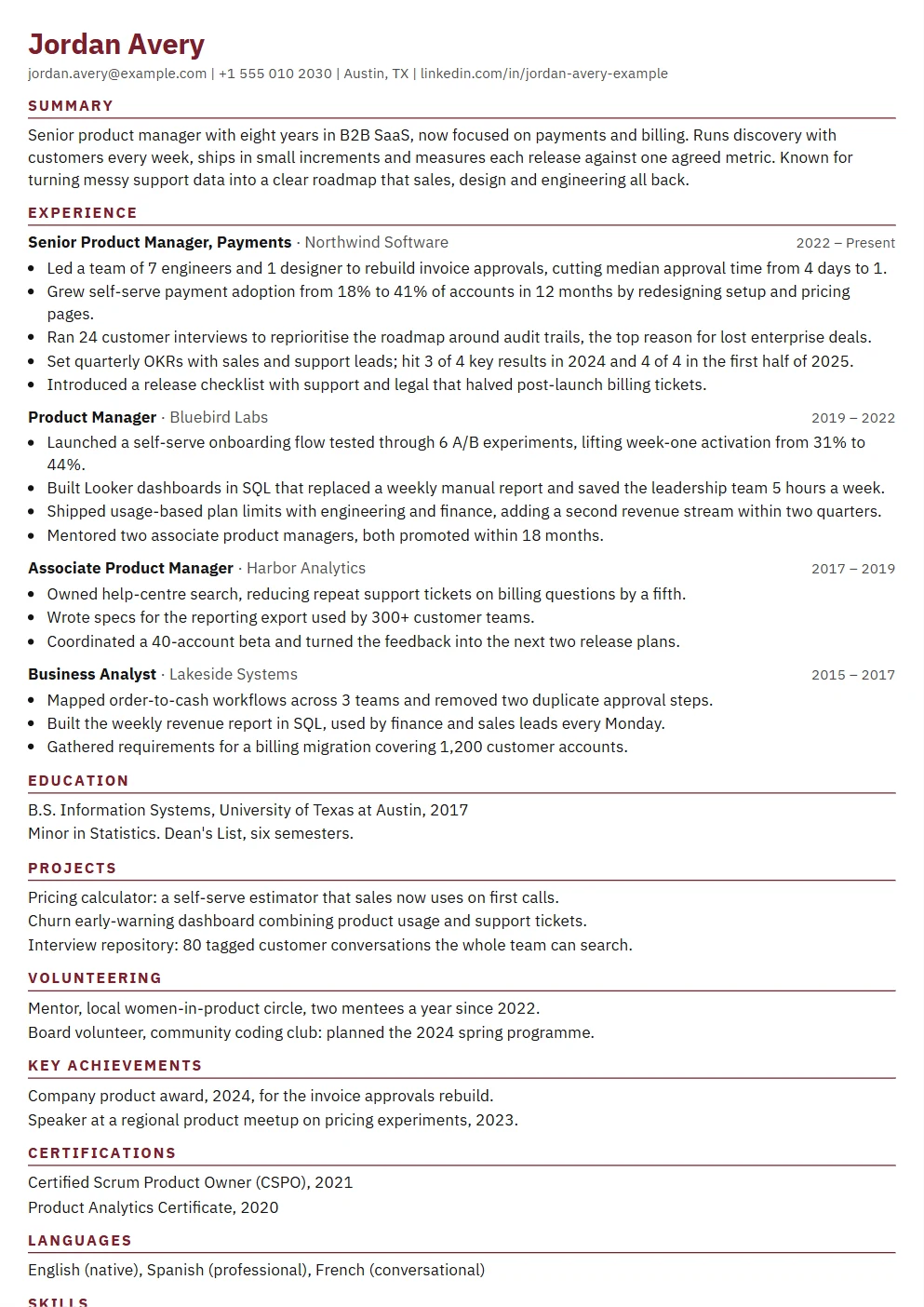
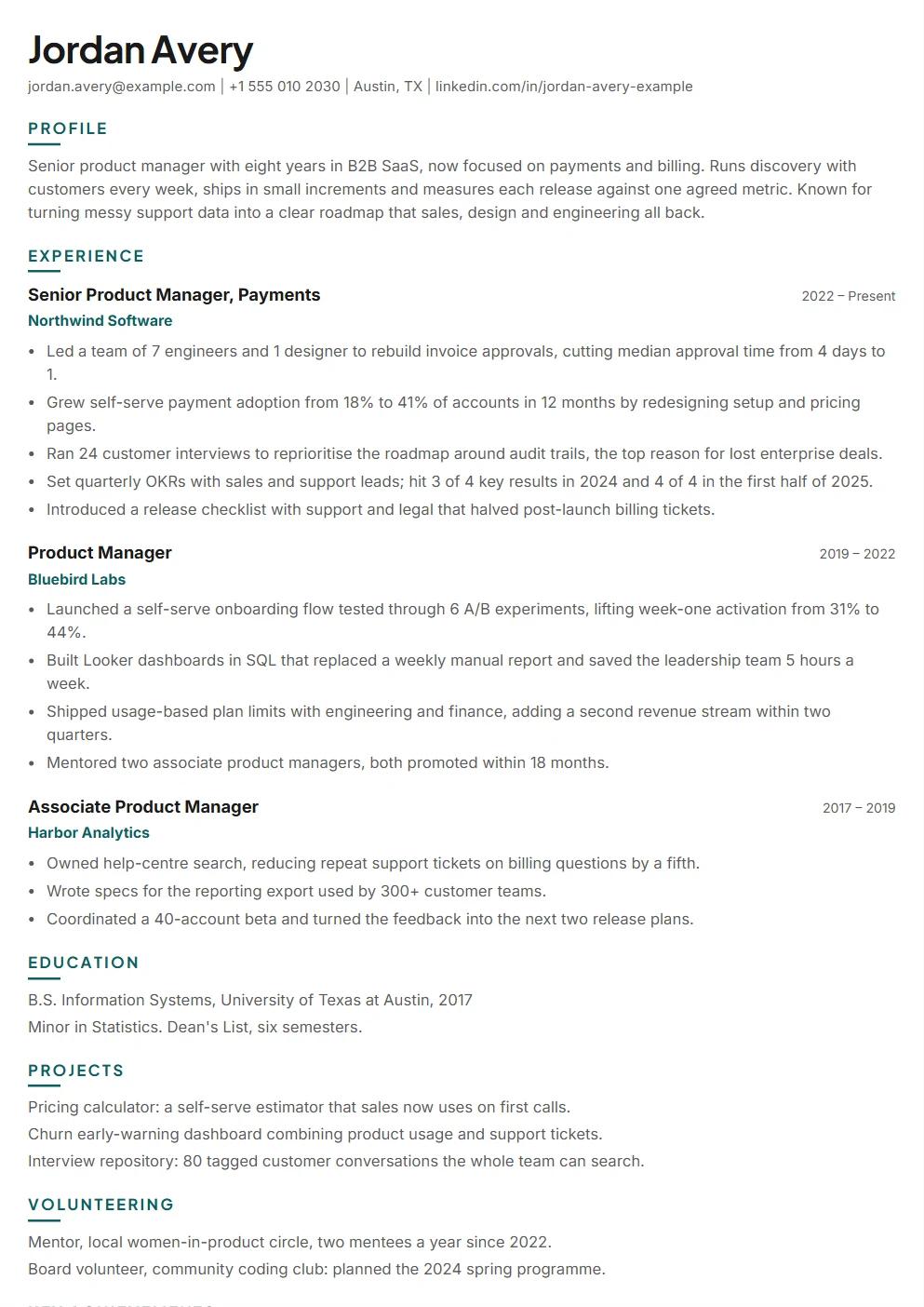
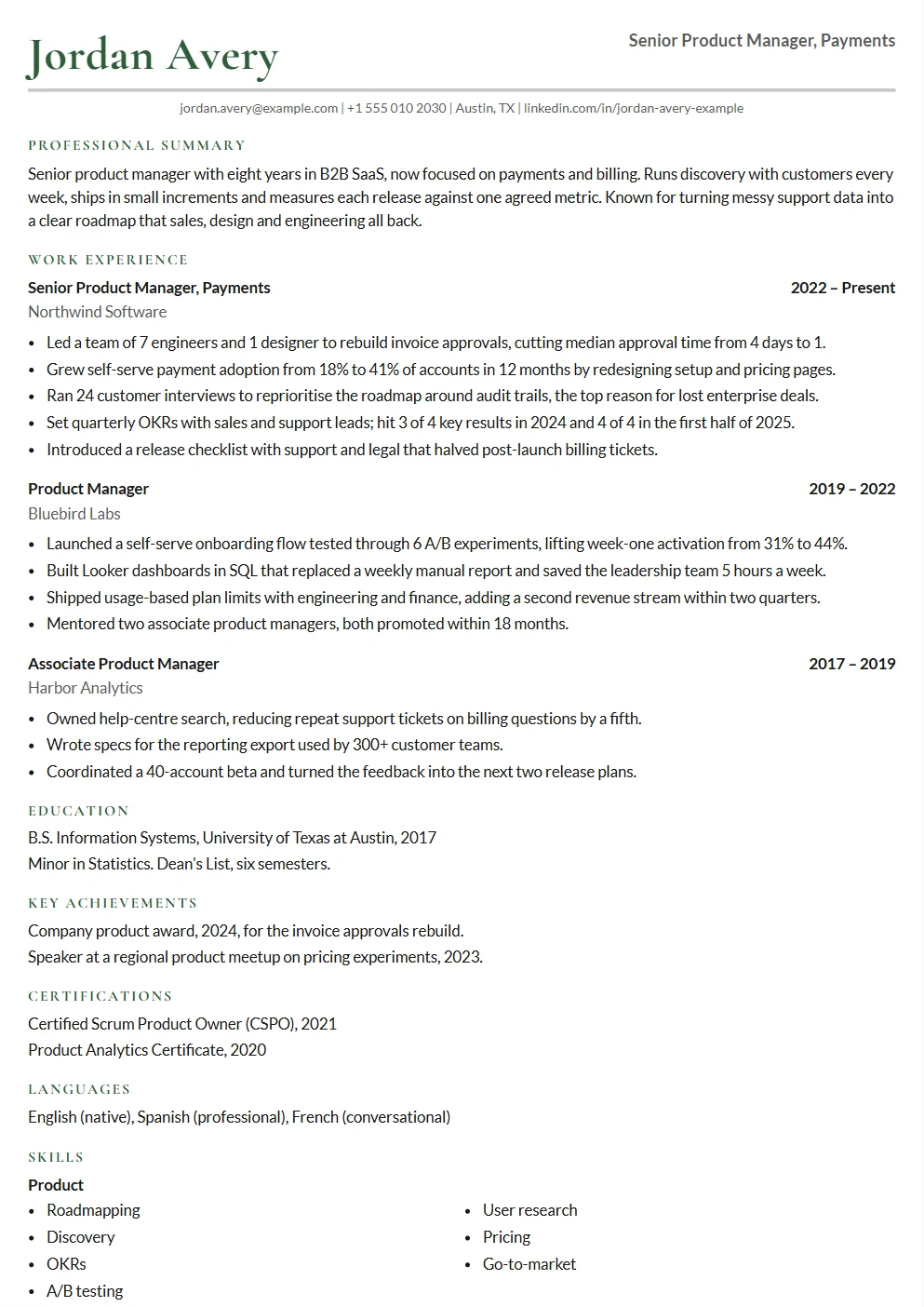
What goes on a student résumé
Employers hiring interns and graduates know you are early in your career. They are looking for evidence that you can learn, follow through and work with other people, plus any skills that match the role. Order the sections so your strongest material comes first:
- Contact details: name, phone, a professional email address, city, and a LinkedIn or portfolio link if you have one.
- A short summary (optional): two or three lines naming the field you are studying, the kind of role you want and one or two relevant strengths.
- Education: degree, institution, expected graduation date, and relevant modules, a dissertation or thesis topic, and grades if they help you.
- Projects: coursework, personal or hackathon projects with a line on what you built or found and the tools you used.
- Experience: part-time jobs, internships, volunteering and placements. Retail, hospitality and tutoring all count.
- Activities and leadership: societies, sports teams, student government or organising roles, with what you actually did.
- Skills: languages, software and technical skills you could demonstrate in an interview.
If your education is the most relevant thing you have, put it first. Once you have a relevant internship or job, experience usually moves above education.
Turning ordinary experience into evidence
A part-time job looks thin when it is written as a list of duties. It reads much better when each bullet says what you did and what came of it, in plain words. Compare:
- Weak: "Responsible for serving customers."
- Better: "Served customers on weekend shifts at a busy café and trained two new starters on the till and opening checklist."
- Weak: "Member of the debating society."
- Better: "Organised the society's weekly sessions for a term and booked rooms and speakers for three inter-university events."
Only use numbers you actually know. An honest, specific sentence without a figure is better than a guessed one, and interviewers do ask where numbers came from.
For more before-and-after examples and the keywords employers use, see the college student résumé guide and the internship résumé guide.
Keep it to one page
For students and recent graduates, one page is the standard almost everywhere. Recruiters screening a stack of graduate applications spend little time on each, and a single focused page makes your strongest points easy to find. If you are going over, cut older school details, merge similar roles, and drop skills you couldn't talk about in an interview.
Read more in how long a résumé should be. These templates are designed to fit more onto a single page:
- Compact templateDenser type for long histories that would otherwise run over.
- Dense templateBordered ATS-style tables, shaded section bars, category-grouped experience rows.
For online application portals, the single-column layouts tagged ATS-safe on the templates page are the safest choice.
Writing a summary without much experience
A summary is optional on a student résumé, but a good one helps when your experience is spread across study, jobs and activities. Keep it to two or three lines and make it specific to the role: what you are studying, what you want to do, and one or two things you can already show.
For example: "Final-year economics student looking for a summer analyst internship. Built and presented a regional housing price model in R for my dissertation, and managed the budget for a 40-member student society." Every claim there should be true for you, with the details changed to match.
There are more patterns, including ones for students and career starters, in résumé summary examples.
Tailor each application, especially for internships
Internship and graduate schemes attract a lot of applicants, and one generic résumé sent to all of them tends to undersell you. Tailoring means moving the most relevant project or job to the top, using the posting's wording for skills you really have, and adjusting your summary to the role.
In Weydr you keep one master résumé and create a separate tailored version for each application, so changing your résumé for a marketing internship never overwrites the version you sent for a data role. Job Fit shows which of the posting's keywords your résumé already covers and which are missing before you change anything.
Weydr's AI is instructed never to invent employers, titles, dates, tools or numbers. It rewords and reorders what is already true in your résumé, so you can defend every line in an interview.
For students this matters more than usual. If a posting asks for skills you don't have yet, the honest move is to leave them out and lead with what you do have, not to stretch a class project into professional experience.
A simple plan for your first résumé
- List everything: modules, projects, jobs, volunteering, societies, awards, languages and software. Don't filter yet.
- Pick the two or three roles you are aiming for and read several postings for each.
- Choose the items from your list that best match what those postings ask for, and write two or three bullets for each.
- Put it into a one-page template and read it aloud. Cut anything vague.
- Check it against a real posting with the free keyword checker, then tailor a version for each application.
- Write a short cover letter for the roles that ask for one. The cover letter guide covers how to write one for a specific job.
What it costs a student
Building, editing and exporting your résumé is free and unlimited, with every template. The free plan also includes a one-time AI allowance: 5 free AI runs, any mix of Job Fit, Tailor, Cover Letter, Interview Prep and Salary, 2 résumé uploads. That is enough to check your fit for a few roles and tailor your résumé to the one you want most. No credit card is needed.
Paid plans are prepaid periods that never auto-renew, so there is no subscription to forget about after recruiting season. The details are on the free résumé builder page, and the full product is described on the AI résumé builder page.
Frequently asked questions
- How do I write a resume with no work experience?
- Lead with education and projects, then add part-time work, volunteering and activities. Write each bullet as what you did and what came of it, and only include skills you could demonstrate in an interview.
- Should a student resume be one page?
- Yes, in almost all cases. One page is the standard for students and recent graduates, and it forces you to lead with your most relevant material.
- Should I include my GPA or grades?
- Include them if they are strong or if the employer asks for them. If not, leave them off and let your projects and experience do the work.
- Is Weydr free for students?
- Building and exporting your résumé as PDF and Markdown (.md) is free and unlimited. The AI tools have a one-time free allowance, and paid plans are prepaid and never auto-renew.
- Will the AI add experience I don't have?
- Weydr's AI is instructed never to invent employers, titles, dates, tools or numbers. It rewords and reorders what is already true in your résumé, so you can defend every line in an interview.
Build your first résumé and tailor it to each application
Free starter allowance, no credit card, no trial timer.
Start free now